How Factoring Turns Your Invoices Into Instant Working Capital
Running a business is a bit like being a professional juggler, except someone keeps throwing more chainsaws into the mix. You’ve got the sales, you’ve got the talent, and you’ve got the drive. But then, you hit the “Waiting Game.”
You finish a massive project, send off an invoice for £50,000, and… nothing. Silence for 30, 60, or even 90 days. Meanwhile, your rent is due, your staff wants to be paid, and a huge new contract just landed on your desk that requires an upfront investment you don’t currently have.
This is the classic working capital gap. It’s the frustrating space between “I’ve earned this money” and “This money is actually in my bank account.” The good news? You don’t have to wait for your customers to wake up and pay. You can turn those paper promises into instant working capital through a process called factoring.
So, What is Factoring?
At its heart, invoice factoring is pretty simple. Instead of waiting months for a customer to pay an invoice, you sell that invoice to a third party at a small discount. They give you the bulk of the cash immediately, and they take over the job of waiting for the customer to pay.
Think of it as an advance on your own hard work. It isn’t a “loan” in the traditional sense because you aren’t borrowing money based on a credit score or a prayer; you’re simply accessing money you’ve already earned.
The “Instant” in Instant Working Capital
The word “instant” gets thrown around a lot in marketing, but in the world of factoring, it’s remarkably accurate. Once you’ve set up a facility with a provider like Best Factoring, you can often see cash hitting your account within 24 hours of raising an invoice.
Compare that to a traditional bank loan. With a bank, you’re looking at weeks of paperwork, providing collateral (like your house), and hoping a computer says “yes.” Factoring scales with you. The more you invoice, the more working capital becomes available. It’s a flexible tap you can turn on whenever your growth starts to outpace your cash reserves.
Factoring vs. Discounting vs. Finance
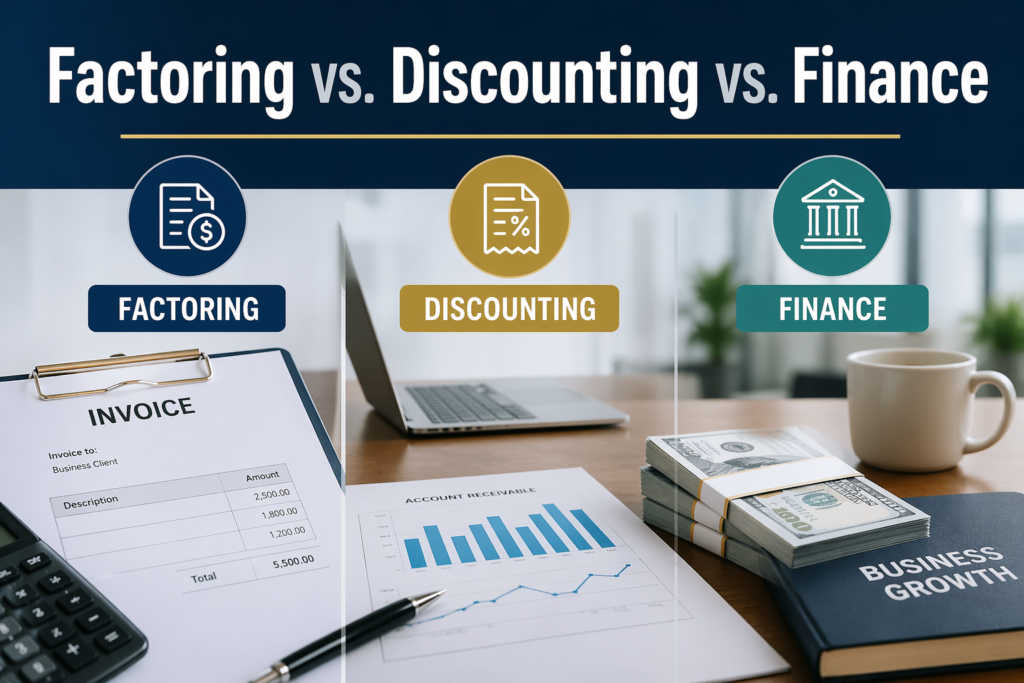
When you start looking into this, you’ll see a few different terms flying around. Let’s break them down so you can sound like a pro:
- Invoice Finance: It is the “umbrella” term for any arrangement where you use your invoices to get cash.
- Invoice Factoring: It is the most common version. The provider manages your sales ledger and handles the collections. Your customers will know you’re using a factoring service because they’ll pay the factor directly.
- Invoice Discounting: It is a bit more “under the radar.” You still get the advance on your invoices, but you maintain control over your own collections. Your customers usually have no idea a third party is involved.
Each has its perks. If you’re a small team that hates chasing payments, factoring is a godsend because it offloads the “debt collection” headache. If you’re a larger firm with an established accounts department, discounting might be more your speed.
Why Choose Factoring Over a Loan?
You might be thinking, “Why not just get a credit line?” Great question. Here’s why factoring often wins:
- No New Debt: You aren’t adding a liability to your balance sheet. You’re just accelerating your own assets.
- No Collateral: Usually, the invoices themselves act as the security. You don’t need to bet your house on a business expansion.
- Unlimited Growth: A bank loan has a ceiling. With factoring, if your sales double next month, your available working capital doubles too.
- Sales Ledger Support: Factoring companies often act as an extension of your back office, checking the creditworthiness of new customers for you.
How Best Factoring Makes Life Easier
If you’re based in the UK, navigating the world of finance can feel a bit cold and corporate. That’s where Best Factoring steps in. We specialize in bridging that gap for UK businesses, offering a tailored approach that recognizes no two companies are the same. Best Factoring doesn’t just look at your balance sheet; we look at the quality of your customers.
As we are UK-based, we understand the local market and the specific pressures British SMEs face. We help you unlock that Instant Working Capital without the red tape, ensuring that when a growth opportunity knocks, you actually have the funds to open the door.
Final Thoughts
The “Waiting Game” is the silent killer of many great UK businesses. It’s not a lack of profit that sinks them; it’s a lack of liquidity. By utilizing invoice finance, you take control of your timeline. You decide when you get paid, not your slowest customer.
Whether you’re looking to hire new talent, buy raw materials in bulk, or just sleep better at night knowing the bills are covered, turning those invoices into instant working capital is the smartest move you can make.
FAQs
1. Will my customers think my business is in trouble if I use factoring?
Not at all. Nowadays, invoice factoring is a standard business tool used by thousands of successful UK firms. In many industries, it’s actually seen as a sign of a company that is proactively managing its growth.
2. How much does it cost?
Fees typically consist of a small percentage of the invoice value (the “discount rate”) and a service fee. It’s often comparable to, or cheaper than, the cost of an unauthorized overdraft or the lost opportunity cost of not having cash on hand.
3. What happens if a customer doesn’t pay?
It depends on whether you have “Recourse” or “Non-Recourse” factoring. With “Recourse,” you are ultimately responsible if the customer defaults. With “Non-Recourse,” the factor takes on the credit risk (though it usually comes with a slightly higher fee).
4. Do I have to factor all my invoices?
Most providers prefer “whole turnover” (factoring everything), but many modern firms like Best Factoring offer flexibility depending on your specific business needs.
5. How fast is the setup?
While a bank might take a month, you can often get a factoring facility live in a matter of days. Once active, individual invoices are typically funded within 24 hours.
Discover the Latest Trends
Stay informed with our latest articles and resources.