Factoring vs Reverse Factoring: Which Is Smarter for Growth?
Cash flow quietly shapes the future of a business. You can be profitable on paper and still struggle to pay bills if money arrives late. In the UK, late payments continue to affect SMEs, often stretching well beyond agreed terms.
That gap creates stress. It slows hiring. It limits growth.
This is where understanding Factoring vs Reverse Factoring becomes important.
Both help unlock working capital. Both fall under Invoice finance. But they solve different problems.
Let’s break it down in a way that actually helps you decide.
What Is Factoring and How Does It Work?
Invoice Factoring allows businesses to access cash tied up in unpaid invoices.
Here’s how it works in practice:
You raise an invoice. Instead of waiting weeks, a factoring provider advances a large portion of that amount, usually between 70% and 90%. In many cases, they also handle payment collection from your customer. Once the invoice is paid, you receive the remaining balance after fees.
This model is widely used across UK sectors where delayed payments are common.
Why businesses choose factoring
- Fast access to working capital
- Funding grows as your sales grow
- Reduced pressure from late-paying clients
- Optional credit control support
For SMEs managing multiple clients, this can stabilise cash flow almost immediately.
What Is Reverse Factoring?
Reverse factoring, also known as supply chain finance, starts from the buyer’s side.
Here’s the key idea:
A large buyer partners with a finance provider. When a supplier submits an invoice and it gets approved, the provider pays the supplier early. The buyer then pays the provider later.
The important detail is this: funding is based on the buyer’s credit strength, not the supplier’s.
Why reverse factoring is used
- Large companies support their suppliers
- Suppliers receive early payment at lower costs
- Supply chains remain stable and predictable
It’s commonly seen in structured relationships between big corporates and smaller suppliers.
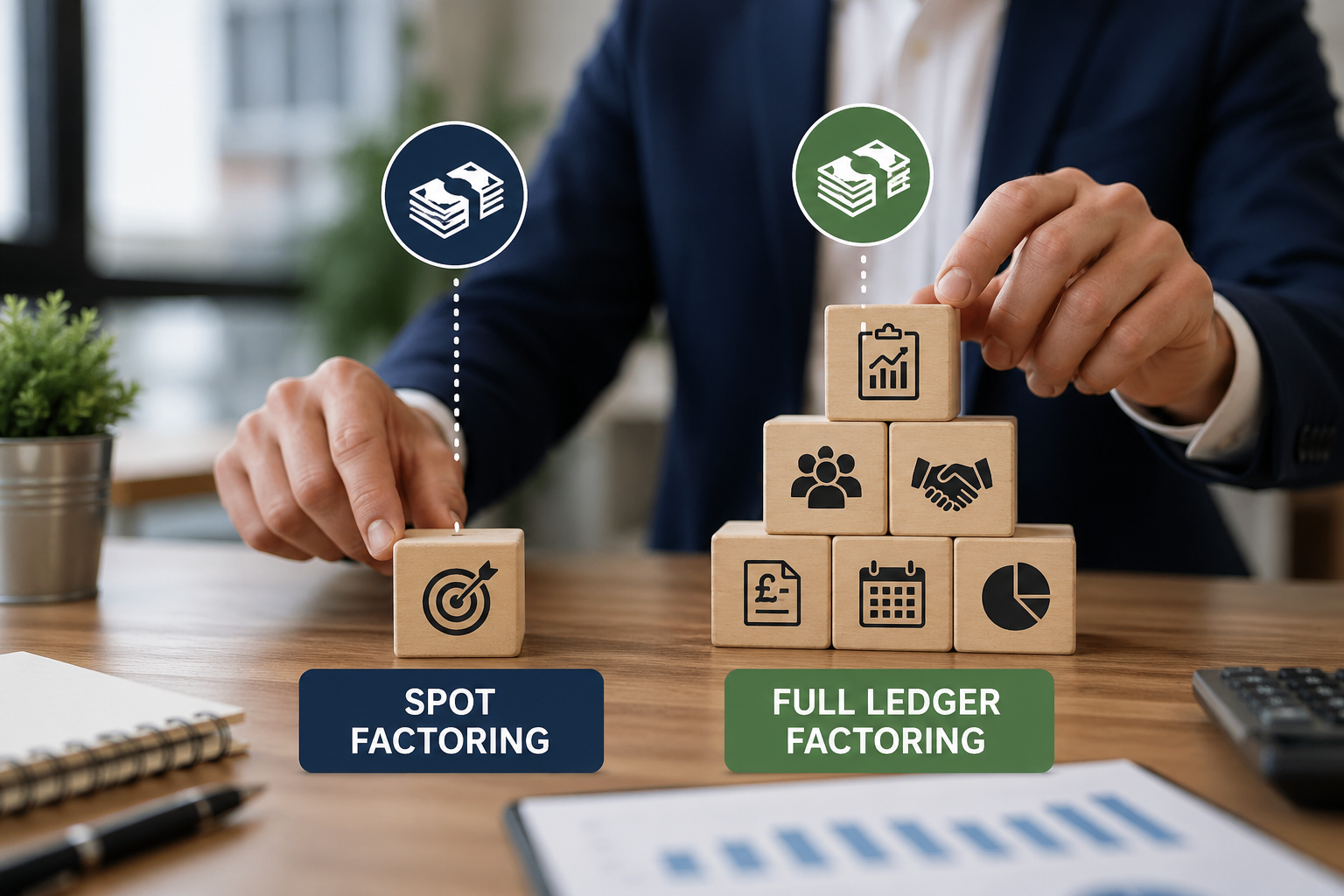
Factoring vs Reverse Factoring: The Real Differences
With factoring, you are in control. You choose the provider, you decide when to use it, and you can apply it across multiple customers. It works independently of your clients.
With reverse factoring, your buyer is in control. The system only exists if your customer has already set it up. You benefit from it, but you don’t manage it.
Another key difference is risk assessment. Factoring depends on your customers’ ability to pay. Reverse factoring relies on the buyer’s creditworthiness, which often results in lower costs.
Accessibility also matters. Factoring is widely available to UK SMEs. Reverse factoring is limited to businesses working with large buyers who offer such programmes.
Factoring vs Reverse Factoring: Which Is Better for Business Growth?
The answer depends on how your business operates day to day.
Factoring is often the better fit if:
- You work with multiple clients
- Payment delays are affecting your cash flow
- You want a funding solution you can control
- You need flexibility as your business grows
Factoring scales naturally. As your invoices increase, your available funding increases too.
Reverse factoring may suit you if:
- You supply to large, established companies
- Those companies offer supply chain finance
- You want access to lower-cost funding
However, many SMEs cannot rely on reverse factoring because it depends entirely on buyer participation.
For most businesses, factoring is simply easier to access and manage.
How Does Invoice Finance Work for Small Businesses?
A lot of business owners assume funding means borrowing money. That’s not always the case.
Invoice finance works by unlocking money you’ve already earned.
Instead of waiting for payment terms to pass, you access cash almost immediately after invoicing.
This helps you:
- Keep operations running smoothly
- Pay staff and suppliers on time
- Take on new work without hesitation
- Reduce reliance on overdrafts
It’s less about borrowing and more about timing.
Invoice Factoring vs Invoice Discounting: Key Differences Explained
Both options fall under Invoice finance, but they serve different needs.
With factoring, the finance provider often manages collections. Your customers are aware of the arrangement. This reduces your administrative workload.
With invoice discounting, you remain in control. You collect payments yourself, and the arrangement is usually confidential. It suits businesses with strong internal systems.
In simple terms, factoring offers support and simplicity. Invoice discounting offers privacy and control.
Is Reverse Factoring a Smarter Financing Option Than Traditional Factoring?
Reverse factoring can offer clear advantages in the right setup.
It may provide lower costs because funding is based on a strong buyer’s credit profile. Payments are often more predictable, which reduces uncertainty.
But there are limitations.
You cannot set it up yourself. You depend entirely on your customer. If you work with several clients, it becomes less practical.
Traditional factoring remains more flexible. It gives you control and works across your entire customer base.
So while reverse factoring can be efficient, factoring is often more reliable for consistent growth.
A Practical Example
A small logistics company works with several clients. Payments are due in 45 days, but delays are common.
Factoring allows them to access funds immediately after invoicing. Fuel costs, wages, and expansion plans stay on track.
Now imagine a supplier working exclusively with a large retail chain that offers reverse factoring.
In that case, reverse factoring may provide quicker and cheaper access to funds.
The right solution depends on your business structure, not just the funding option itself.
Final Thoughts
Cash flow influences every decision you make. It affects hiring, investment, and daily operations.
If you want flexibility and control, Invoice Factoring is often the stronger option for UK SMEs.
If your business is closely tied to a large buyer offering structured finance, reverse factoring can work in your favour.
The smarter choice is the one that fits your reality, not just the theory.
If late payments are slowing your progress, exploring tailored Invoice finance solutions through Best Factoring could help you move forward with confidence.
FAQs
1. What is the difference between invoice factoring and reverse factoring?
Ans. Factoring is initiated by the supplier to access early payment, while reverse factoring is arranged by the buyer to support supplier payments.
2. Is factoring suitable for small businesses in the UK?
Ans. Yes, factoring is widely used by SMEs, especially those dealing with delayed payments or long credit terms.
3. How quickly can I receive funds through invoice finance?
Ans. Many providers release funds within 24 to 48 hours after invoice approval, depending on the agreement.
4. What is the difference between factoring and invoice discounting?
Ans. Factoring includes collection services, while invoice discounting allows businesses to retain control over customer payments.
5. Is reverse factoring available to all businesses?
Ans. No, it is only available when a buyer has established a supply chain finance programme.
Discover the Latest Trends
Stay informed with our latest articles and resources.