How Factoring Helps Businesses Grow Without Debt
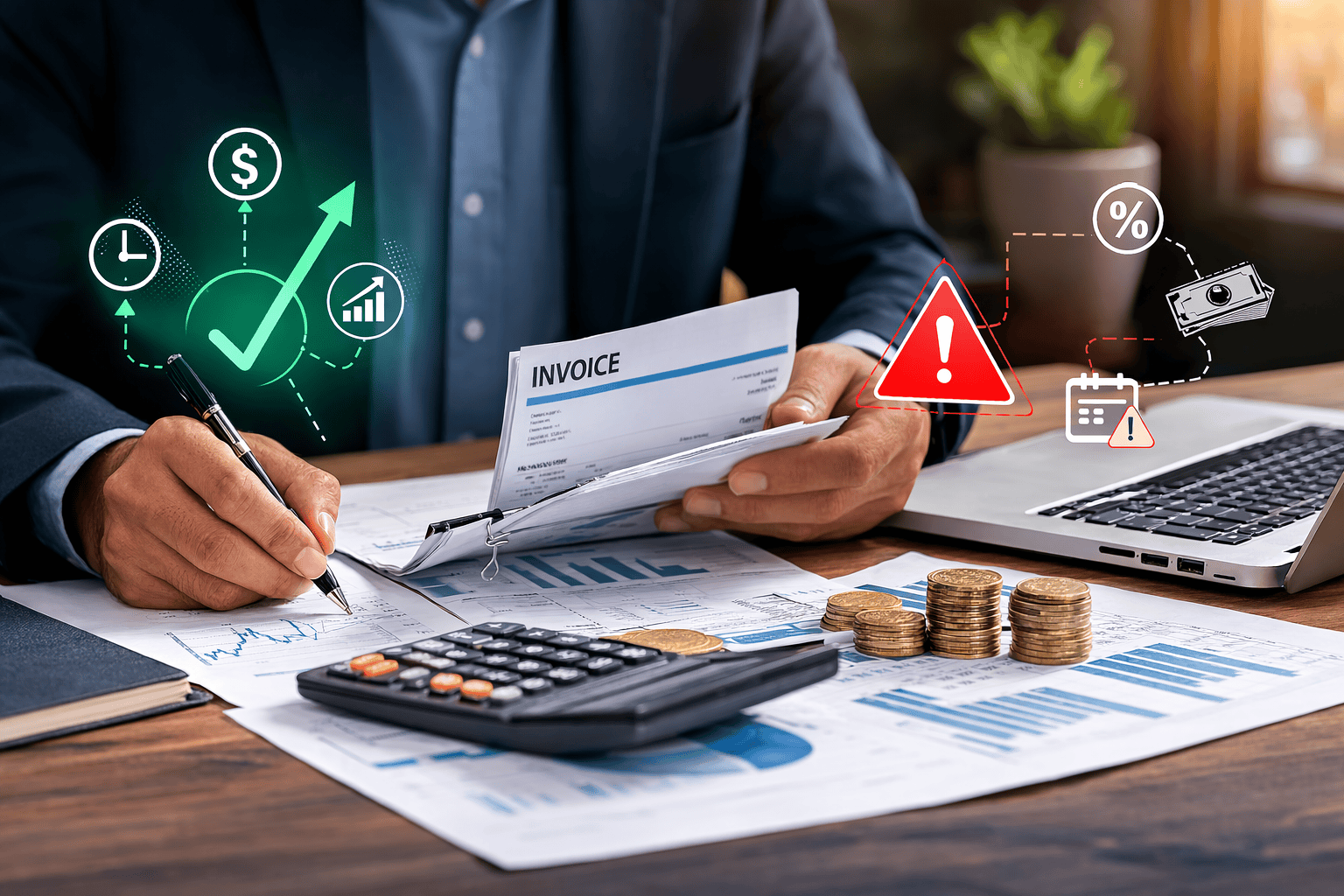
Running a business in the UK often comes with a strange contradiction. Sales might be healthy, orders keep coming in, and the company is technically profitable. Yet the bank account tells a different story.
Many UK SMEs experience this. A study from the Federation of Small Businesses (FSB) has repeatedly highlighted late payments as one of the biggest threats to small companies. Some invoices take 60 days or more to clear, leaving owners juggling payroll, supplier costs, rent, and tax while waiting for money they have already earned.
This is exactly where Business Invoice Factoring becomes more than just a financial tool. For many businesses, it becomes the breathing space that allows growth without borrowing traditional debt.
What Business Invoice Factoring Actually Does
Most business owners understand the problem quickly once they hear the concept.
You issue an invoice to a customer with payment terms of 30 or 60 days. Instead of waiting, a factoring provider advances a large portion of that invoice value almost immediately. In many UK arrangements, businesses receive around 80 to 90 percent of the invoice upfront.
Once the customer pays the invoice, the remaining balance is released after the factoring fee is deducted.
The important distinction is simple. The money is not borrowed. It comes from invoices that already belong to your business.
That is why Business Invoice Factoring is often grouped under Invoice finance rather than traditional lending.
Why Cash Flow, Not Revenue, Drives Real Growth
A surprising number of profitable businesses still fail because of cash flow problems.
Research from UK Finance has repeatedly shown that small businesses often experience cash flow pressure during periods of rapid growth. More sales mean more invoices, but it also means higher operating costs before payment arrives.
Take a small logistics company as an example.
They secure a large distribution contract with a national retailer. Deliveries increase overnight. Fuel costs rise, drivers need paying weekly, and vehicle maintenance ramps up. Meanwhile, the retailer pays invoices on 60 day terms.
The contract is profitable. The cash flow gap is the problem.
With Business Invoice Factoring, that logistics firm can unlock most of the invoice value within a day or two, keeping operations running smoothly while the customer payment moves through normal channels.
Factoring for Business Growth in the Real World
Across the UK, several industries rely heavily on factoring without making much noise about it.
Recruitment agencies are a classic example. They pay temporary staff weekly but invoice clients monthly. Without steady cash flow, scaling becomes difficult.
Factoring allows agencies to fund payroll while waiting for client payments.
Manufacturers face a similar challenge. Large orders require raw materials, production costs, and labour long before payment arrives. Factoring ensures production continues without delay.
These situations explain why Factoring for Business Growth has become a common funding strategy for expanding SMEs.
Why Many Businesses Prefer Factoring Over Bank Loans
Traditional lending works well for some companies, but it often comes with conditions that growing businesses struggle with.
Banks usually require strong credit history, collateral, and fixed repayment schedules. Even when sales fluctuate, loan repayments remain constant.
Factoring works differently.
Cash Arrives When Sales Happen
Funding increases as invoices increase. When sales grow, available funding grows as well.
No Additional Debt Pressure
Because factoring is tied to invoices rather than loans, it does not sit on the balance sheet in the same way as traditional borrowing.
Credit Control Support
Many factoring providers handle payment collection. This saves time and improves payment discipline from customers.
Faster Approval
Unlike bank loans, which can take weeks to arrange, many Invoice Factoring facilities can be set up far more quickly once invoices and customer credit checks are approved.
Invoice Factoring vs Invoice Discounting
Businesses often come across two forms of Invoice finance.
With Invoice Factoring, the finance provider usually manages the collection of payments from customers.
With invoice discounting, the business keeps control of its own credit control and collections while still receiving funding against invoices.
Both options help unlock working capital. The choice often depends on how much involvement a company wants from the finance provider.
When Invoice Factoring Makes the Most Sense
Factoring tends to work best for companies that:
• Sell products or services to other businesses
• Offer payment terms of 30 days or longer
• Experience rapid growth
• Need consistent cash flow for payroll or supply chains
For startups and scaling SMEs, it often removes one of the biggest barriers to expansion.
Cash flow uncertainty.
Conclusion
Growth rarely fails because of lack of opportunity. More often, it stalls because money arrives too slowly.
Invoices sitting unpaid for 30 to 60 days create pressure even for successful businesses. Business Invoice Factoring changes that dynamic by turning completed work into immediate working capital.
For UK SMEs dealing with long payment cycles, it offers a practical way to fund operations, accept larger contracts, and expand without adding traditional debt.
And sometimes that single shift, turning invoices into usable cash, is the difference between surviving and scaling.
FAQ
1. What is Business Invoice Factoring?
Ans. Business Invoice Factoring is a funding solution where a company sells unpaid invoices to a finance provider in exchange for immediate cash, usually up to 90 percent of the invoice value.
2. Is invoice factoring considered a loan?
Ans. No. Factoring is not a traditional loan because funding is based on outstanding invoices rather than borrowed money.
3. How quickly can a business receive funds?
Ans. Most providers release funds within 24 to 48 hours once invoices are verified and approved.
4. What industries commonly use invoice finance?
Ans. Recruitment agencies, logistics companies, manufacturers, wholesalers, and service businesses frequently use Invoice finance to manage cash flow.
5. What is the difference between Invoice Factoring and invoice discounting?
Ans. With Invoice Factoring, the finance provider typically handles collections from customers. With invoice discounting, the business keeps control of collecting invoice payments itself.
Discover the Latest Trends
Stay informed with our latest articles and resources.